
Weighted walking for beginners: how to start with a vest
By the MORE OUTSIDE editorial teamPublished 5 min readSources checked 10 November 2026

The short answer
Weighted walking means carrying extra load, usually in a vest, so a familiar walk takes more effort. Start only once ordinary walks feel comfortable. Fit the vest snugly, use the smallest load it allows on a short, level route you know, notice how you feel afterwards, and change one thing at a time.
What is weighted walking?
Weighted walking is ordinary walking with some extra load carried on your body. Most people use a weighted vest, which holds the weight close to the chest and back. Carrying more means your legs, heart and lungs work a little harder over the same route, at the same pace.
That is the whole idea: it changes the effort of a walk. It doesn't guarantee any particular result, and it doesn't mean you should also try to walk faster. If you add load, it is usually sensible to keep your normal pace, or even slow down at first.
When are you ready to try weighted walking?
Start from walks you already do comfortably without a vest. If you are still building a regular habit, keep going unweighted for now; our guide to walking for fitness after 50 and power walking for beginners are better first steps.
Everyday unweighted walking and loaded training are different things. Your everyday walks keep you moving, and they can stay exactly as they are. Weighted walking is an optional extra on some walks, not a replacement for them.
How should you fit a vest and choose a first load?
Run through these checks before you set off, and again when you get home.
Before you set off
- Fitted over the layers you walk in
- Belts snug; load doesn't bounce or slide
- You can take a full breath and talk
- Arms swing freely, nothing rubs
- Smallest suitable load
- Short, level, familiar route
When you get home
- Back, shoulders, hips, knees and feet feel fine later and next day
- Breathing settled quickly
- Change only one thing next time: time, load or route
- Fit it evenly. Put the vest on over the layers you walk in and fasten the belts so the load sits close and doesn't bounce or slide to one side.
- Breathe freely. You should be able to take a full breath and talk normally. If the vest presses on your chest, loosen it or take weight out.
- Swing your arms. Nothing should rub under the arms or stop a natural swing.
- Start with the smallest suitable load. With a vest that has removable bags, take most of them out. There is no reliable universal starting weight. A percentage of body weight alone cannot account for your health, balance, fitness and the vest’s own weight.
- Choose a short, level, familiar route. Somewhere you know well, without steep hills or rough ground, and where you can stop easily.
- Check in afterwards. How did your back, shoulders, hips, knees and feet feel later that day and the next? Mild tiredness is normal; pain is not.
How heavy should a weighted vest be?
There isn't a single right answer. A percentage of body weight alone cannot account for your health, balance, fitness and the vest’s own weight. What matters more for a beginner is how light the vest can go. A vest that can be emptied down to a very small load is more useful than one with a high maximum.
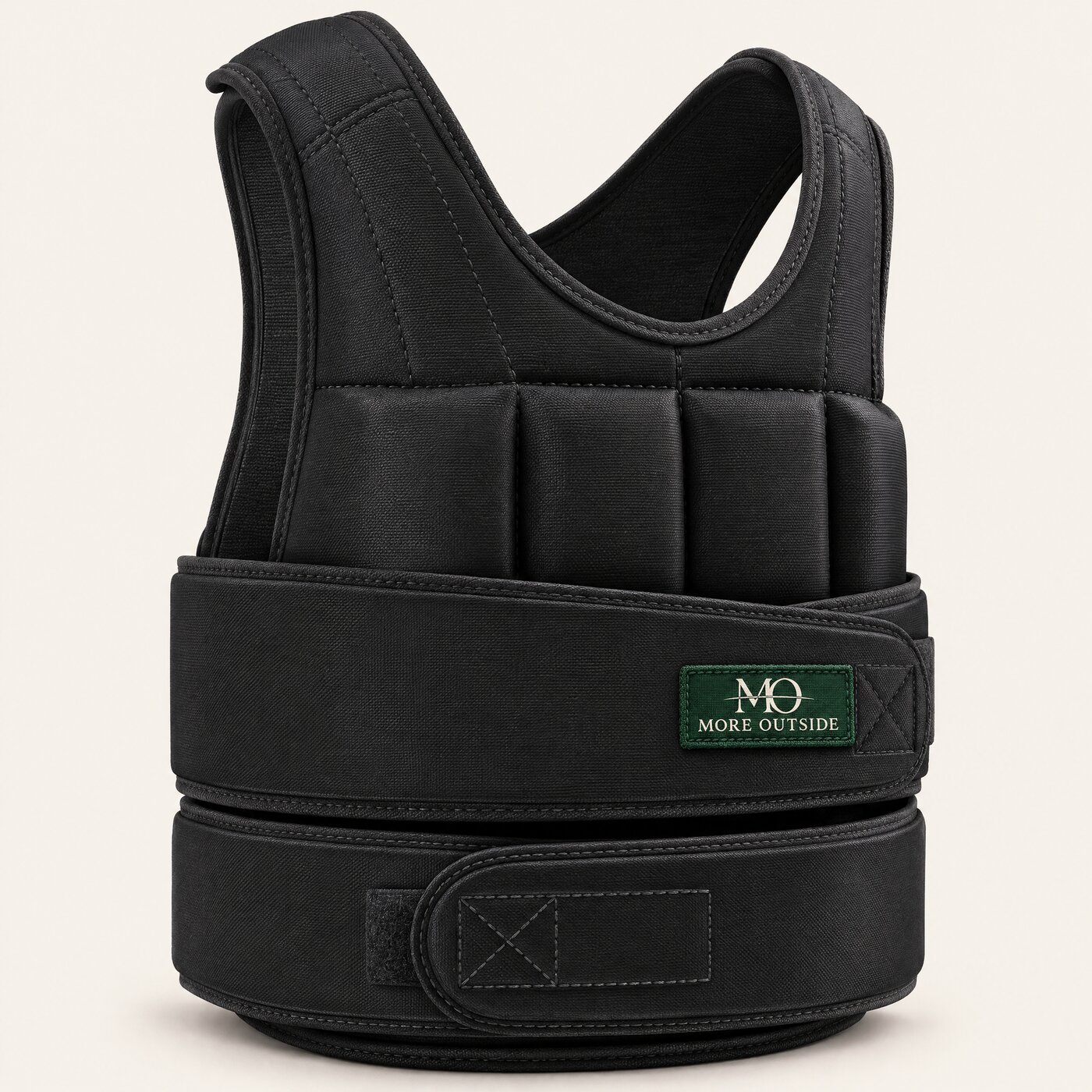
Our Everyday Adjustable Weighted Vest holds up to 10 kg in 38 small removable bags. That 10 kg is the vest's maximum capacity, not a recommended starting weight, and many people will never use it all. HOMCOM, the manufacturer, doesn't publish the empty weight of the vest itself, so we can't tell you exactly how light it is with every bag removed.
How long and how often should you walk with a vest?
Begin with a short walk, shorter than your usual one, and keep most of your walks unweighted. The NHS advises building up activity gradually [1]; applying that to vest walking is our editorial suggestion, not NHS guidance on loaded walking. There is no one daily schedule that suits everyone, so we don't suggest wearing a vest every day by default.
When you are ready to progress, change one factor at a time: a little more time, or a little more weight, or a slightly hillier route, never all three together. Repeat the comfortable version before considering another change, and pay attention to how you feel during and after it. The talk test still applies; if you can't hold a conversation, the walk has become too hard [1][3].
What can't a weighted vest do?
A vest doesn't replace strength or balance exercise. The NHS guidance for adults aged 65 and over recommends activities that improve strength, balance and flexibility on at least two days a week, as well as moderate activity [2]. Exercises such as sit-to-stand from a chair, step-ups or simple balance work still matter, whatever you wear on your walks.
We don't claim a vest will help you lose weight, increase bone density or strengthen your joints, and you shouldn't treat one as a treatment for osteoporosis. If you have osteoporosis, back or joint problems, a heart or lung condition, or balance concerns, or you haven't been active for a while, talk to your GP or a physiotherapist before you start [2]. Stop if you feel pain, dizziness or unusual breathlessness.
For more on choosing a vest, see our guide to weighted vests for women over 50.
Common questions
- Can I walk with a weighted vest every day?
- There is no one daily schedule that suits everyone. You can keep most walks unweighted and trial the vest on selected walks.
- How heavy should my first weighted walk be?
- Use a manageable light load; even an empty vest may not suit everyone. There is no universal starting weight, and a vest's maximum, such as 10 kg, is not a starting point.
- Does walking with a vest burn more calories?
- Carrying extra load generally takes more effort, but the difference depends on the load, the route and you. We don't promise any figure or weight loss.
- Is weighted walking safe if I have osteoporosis?
- Speak to your GP or a physiotherapist first. A vest is not an osteoporosis treatment and adds load to the spine.
- Is weighted walking the same as rucking?
- They are related. Rucking usually means carrying weight in a backpack; a vest spreads the load around the upper body.
General information, not personal medical advice. If you have a health condition, are new to exercise or are unsure, talk to your GP before changing your activity.
Sources
- [1] NHS. Walking for health (accessed 10 November 2026). Read source (opens in a new tab)
- [2] NHS. Physical activity guidelines for older adults (accessed 10 November 2026). Read source (opens in a new tab)
- [3] Centers for Disease Control and Prevention (US). Measuring physical activity intensity (accessed 10 November 2026). Read source (opens in a new tab)
Next step: our free beginner guide
Pace, the talk test, shoes, weather and when to stop — on one printable page.
Read the guideOptional kit mentioned here
Our vest is optional. Its removable bags let you start light; the belt bag and poles are extras you don't need.
Keep reading

4 min read
Weighted vests for walking: a guide for women over 50
How heavy a walking vest should be, whether you can wear one every day, how it compares with a backpack or ankle weights, and what to check for fit.

4 min read
Power walking vs weighted walking: which should you try?
How power walking and weighted walking differ from brisk walking, rucking, Nordic walking and running, what each needs, and a simple way to choose.