
Weighted vests for women over 50: benefits, limits and what to look for
By MORE OUTSIDE editorial3 min readSources checked 9 November 2026

The short answer
A weighted vest adds load to a walk, making familiar movement harder. Evidence that walking in a vest improves bone density is weak, and it isn't a treatment for osteoporosis. If you try one, look for a low starting weight, small removable increments and a snug fit.
What a weighted vest actually does
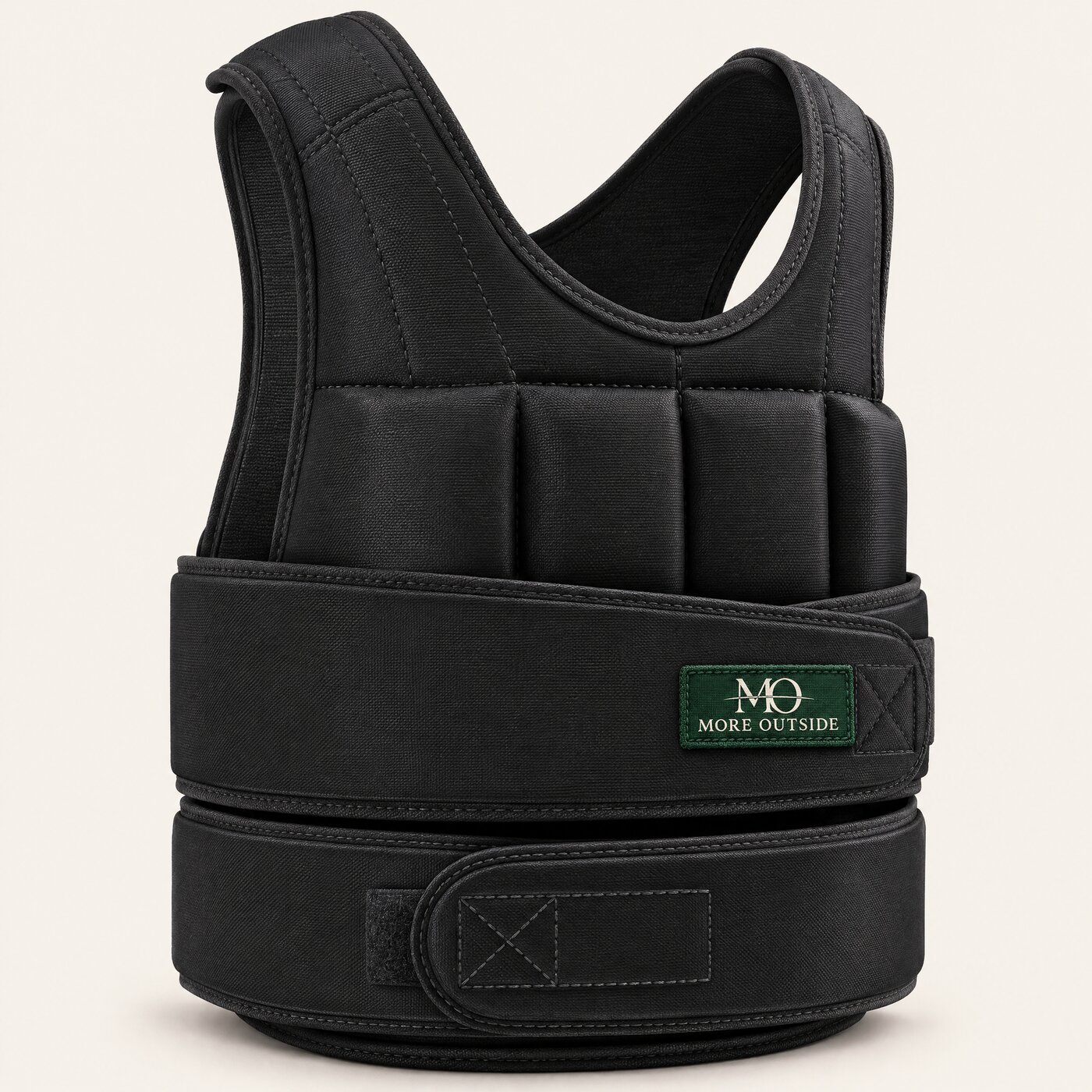
A weighted vest holds extra weight close to your body, so walking, stairs or exercises take more effort. Osteoporosis Canada notes that people typically add somewhere between 3% and 20% of their body weight [1] — a wide range, which is why we don't suggest any universal figure.
For many women it's a way to make a walk they already enjoy a little more demanding, without changing the route or speeding up.
Do weighted vests help bone health?
This is the most common question, and the honest answer is: probably not in the way people hope. In a 2025 statement, Osteoporosis Canada says there is little to no evidence that wearing a vest while walking increases bone mineral density, and that the studies which exist show no benefit [1]. Research on vests during exercises such as squats is described as very uncertain [1].
Their experts suggest a vest might help build muscle strength by making strength exercises harder, but say it would not be their first choice of resistance [1]. If bone health is your main concern, talk to your GP and consider a strength programme designed by someone with osteoporosis expertise.
Who should be cautious
There's little research on vest safety. Osteoporosis Canada notes a vest may affect balance and adds load to the spine, which may not suit people with spinal arthritis or disc problems [1]. Speak to a GP first if you have osteoporosis, a heart or lung condition, balance problems, or haven't exercised for a while [2][3].
What to look for in a weighted vest
If you decide to try one, check:
- Minimum weight — the lightest setting matters more than the maximum. Our Everyday vest (made by HOMCOM) holds up to 10 kg in 38 small removable bags; that's its capacity, not a target, and the maker doesn't publish its empty weight. Start with most bags removed.
- Small, removable increments — ours splits the load across many small bags, so you can add a little at a time.
- Fit — adjustable straps that hold the load close without bouncing or restricting breathing.
- Practicality — easy fastenings you can manage yourself, and padding where the vest touches your shoulders.
How to start walking with a vest
Build a regular walking habit first. Then wear the vest on a short, flat, familiar route, at the lightest setting, and keep everything else the same. Add one pack only when that walk feels comfortable for a couple of weeks. Stop if you feel pain, dizziness or unusual breathlessness.
A vest doesn't replace strength work. The NHS advises adults aged 19 to 64 to do strengthening activities on at least two days a week, and adults 65 and over to do activities that improve strength, balance and flexibility on at least two days a week [2][3]. Ordinary brisk walking remains a complete starting point [4].
Common questions
- How heavy should a weighted vest be for walking?
- There's no universal figure or percentage rule. Start at the lightest setting and add weight gradually only if your usual walk feels comfortable.
- Will a weighted vest prevent osteoporosis?
- There's no good evidence for that. Osteoporosis Canada says studies of vest walking show no benefit to bone density.
- Can I wear a vest if I have osteoporosis?
- Ask your GP or a specialist first. A vest adds load to the spine and may affect balance.
- Is a weighted vest better than ankle weights for walking?
- We don't recommend ankle weights for prolonged walking. Use them for slow, controlled exercises instead.
General information, not personal medical advice. If you have a health condition, are new to exercise or are unsure, talk to your GP before changing your activity.
Sources
- [1] Osteoporosis Canada. Weighted vests: are they good for bone health? (15 September 2025). Read source (opens in a new tab)
- [2] NHS. Physical activity guidelines for older adults (accessed 9 November 2026). Read source (opens in a new tab)
- [3] NHS. Physical activity guidelines for adults aged 19 to 64 (accessed 9 November 2026). Read source (opens in a new tab)
- [4] NHS. Walking for health (accessed 9 November 2026). Read source (opens in a new tab)
Next step: our free beginner guide
Pace, the talk test, shoes, weather and when to stop — on one printable page.
Read the guideOptional kit mentioned here
None of these are needed to start walking.
Keep reading

3 min read
Benefits of walking after 50: how to build a routine that lasts
What regular walking can do after 50, how brisk walking differs from power, race and weighted walking, and a simple way to build a habit you keep.

3 min read
How many steps a day after 60? What the research actually says
Do you need 10,000 steps? A plain-English look at the 2022 meta-analysis of 15 cohorts, what 6,000–8,000 steps means for over-60s, and its limits.